Clinical Pilates Education
Pilates as Pain Reprocessing Therapy
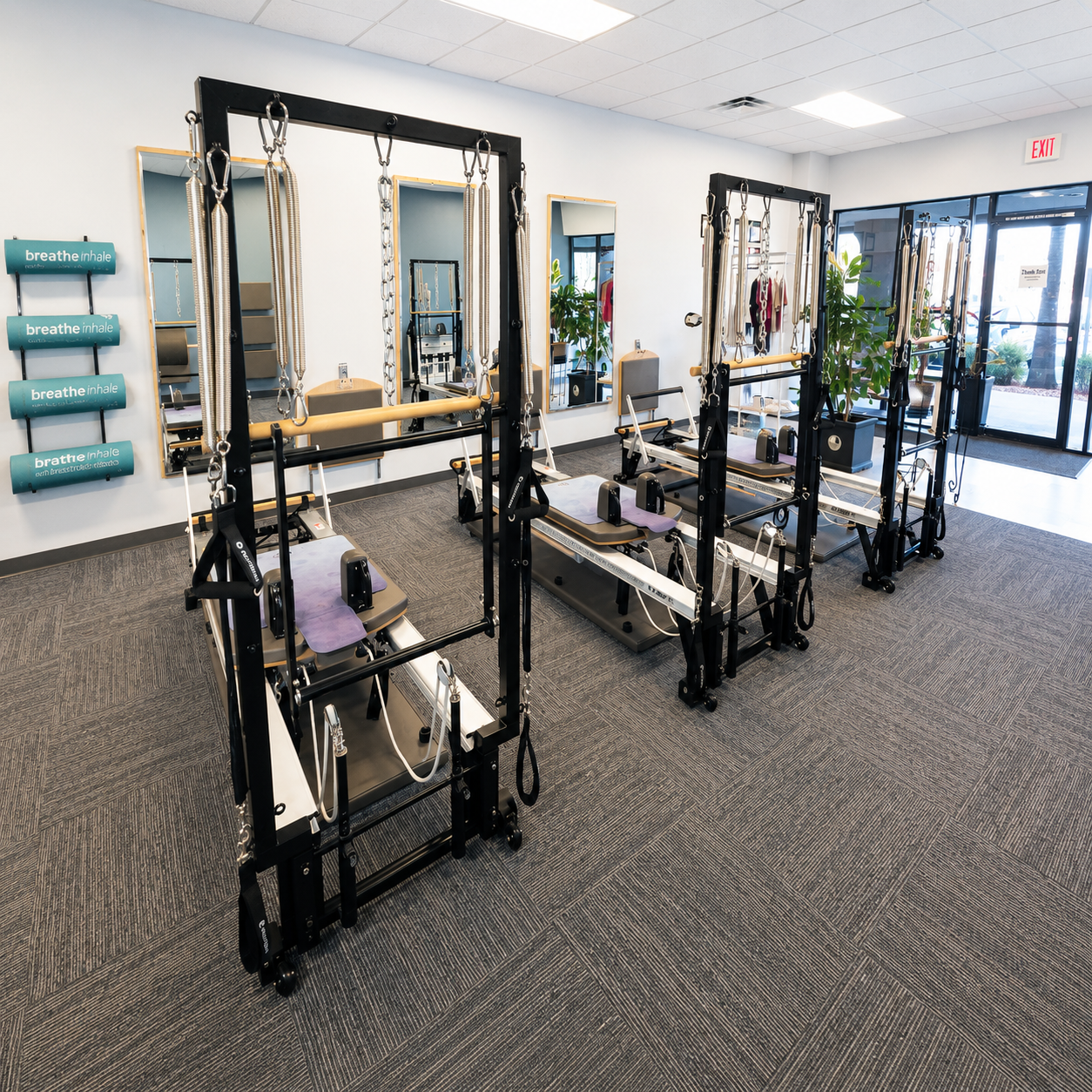
Chronic pain isn't always about tissue damage — often, it's about how the brain has learned to interpret sensation. Discover how Pilates, approached through the lens of Pain Reprocessing Therapy, can help retrain the nervous system and restore confidence in movement.
Chronic pain is one of the most complex and misunderstood experiences a person can live with. It persists long after injuries have healed. It shows up without clear physical cause. It changes how people move, how they think about their bodies, and how much they trust themselves to do the things they once did without a second thought.
What neuroscience has revealed in recent decades is that chronic pain is frequently not a signal of ongoing tissue damage — it is a learned response. The brain, shaped by past injury, illness, or sustained stress, begins to misinterpret normal sensory input as threatening. It becomes hypervigilant, amplifying signals that don't require amplification, protecting a body that no longer needs the level of protection it's receiving.
This is where Pain Reprocessing Therapy meets Pilates — and where something genuinely transformative becomes possible.
When the Brain Gets It Wrong
Anyone who has experienced chronic pain knows the disorienting quality of it. The body feels unreliable. Movements that should be simple feel dangerous. Sensations that others might not notice become impossible to ignore.
In a Pilates session, this can show up in unexpected ways. A client asked to find their neutral spine may feel dramatically off-center. A simple movement may produce a sensation that feels disproportionate to the effort. These reactions are not signs that something is wrong — they are the nervous system surfacing its learned patterns. They are, in fact, the starting point for change.
The brain interprets the world through the lens of its history. When that history includes pain, injury, or chronic illness, the lens becomes distorted. Pilates, practiced with an understanding of pain neuroscience, creates the conditions for the brain to update that lens — gradually, safely, and with full awareness.
How Pilates Supports Pain Reprocessing and Neuroplasticity
Feedback that challenges habit.One of the most powerful tools a skilled Pilates instructor has is precise, timely feedback — verbal cues, hands-on adjustment, and guided awareness that interrupts the brain's habitual movement patterns. When the brain receives new, accurate information about where the body actually is in space, it begins the process of revising its assumptions. Over time, this rewires how movement and sensation are perceived.
The power of the pause.When the brain encounters information that contradicts its existing model — a new movement pattern, an unfamiliar sensation — it needs time to process. Rushing through that moment reinforces the old pattern. Pausing, observing without judgment, and allowing the nervous system to sit with something new is where relearning actually happens. This is a deliberate part of how Clinical Pilates at Design 2 Move is practiced.
Gently challenging misinterpretation.Chronic pain often persists because the brain has learned to treat normal sensory signals as threats. The process of reprocessing involves acknowledging those signals — not dismissing or pushing through them — and gently introducing evidence that they are safe. This is not about ignoring pain. It is about helping the nervous system learn, through repeated experience, that movement does not equal danger.
Building neuroplasticity through consistent practice.The brain's ability to reorganize itself — neuroplasticity — is not a passive process. It requires repetition of new experiences. Each session that introduces safe, controlled, mindful movement gives the nervous system another data point: the body can be trusted. Over time, these data points accumulate into genuine change — reduced pain, improved alignment, greater freedom of movement, and restored confidence in the body's capacity.
What Clients Experience Through This Approach
The benefits of Pilates practiced through a Pain Reprocessing lens extend beyond the physical.
Pain that once felt overwhelming begins to feel less threatening when experienced in a context of safety and control. The mindset around sensation shifts from fear and avoidance toward curiosity — what is this signal actually telling me, and does it require the response I've been giving it?
Emotional regulation improves alongside physical awareness. The two are not separate processes. When the nervous system learns to feel safe in movement, the emotional load that chronic pain carries begins to lighten as well.
Somatic awareness — the ability to track bodily sensations with accuracy and without panic — deepens with practice. Clients begin to distinguish between discomfort that is part of productive work and pain that signals a genuine boundary. This discernment is itself a profound form of healing.
A Different Kind of Recovery
Pilates as Pain Reprocessing Therapy is not a quick fix, and it is not appropriate for every setting or every instructor. It requires a practitioner who understands both the movement science and the neuroscience — someone who can hold space for a client's nervous system while building a program that progressively expands what feels safe and possible.
At Design 2 Move Pilates, this is the foundation of our Clinical approach. If you are living with chronic pain, recovering from injury, or simply feeling disconnected from your body after a long period of difficulty — this work is for you. Contact us today to start the conversation.