Clinical Pilates Education
What Makes Clinical Pilates Different?
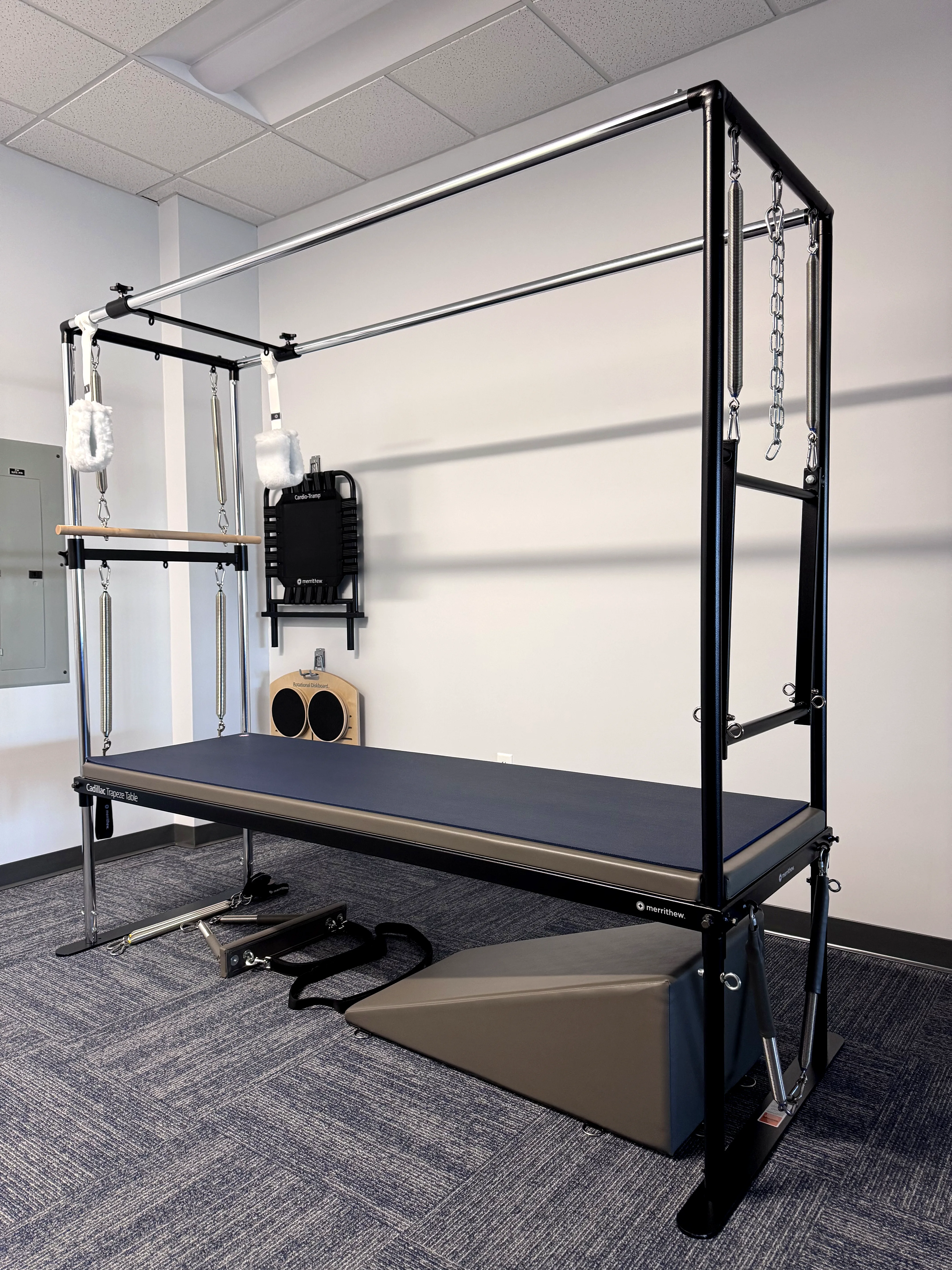
Not all Pilates is created equal. Discover how Clinical Pilates goes beyond the group reformer trend to deliver personalized, rehabilitation-focused programming designed around your body and your goals.
Not long ago, Pilates was known primarily in rehabilitation and physical therapy circles. Today, it's everywhere — and that's mostly a good thing. But as reformer studios have multiplied across every city, a common misconception has taken hold: that Pilates is simply a trendy group fitness class.
There's nothing wrong with group reformer classes. They're a great entry point and serve a real purpose for general fitness. But they represent only one side of what Pilates can do.
What Is Commercial Pilates?
The "group reformer" format you see most often follows a class-wide routine — the same sequence for every person in the room. It's energizing, social, and accessible. For generally healthy individuals looking to build strength, improve posture, or stay active, it works well.
This is what most people picture when they hear "Pilates" today.
What Is Clinical Pilates?
Clinical Pilates is a personalized, assessment-driven approach developed specifically for clients with rehabilitation needs or complex movement goals. It's led by fully certified Pilates instructors who specialize in rehabilitation — not just fitness instruction.
At Design 2 Move Pilates, Clinical Pilates begins with a thorough postural and movement assessment. From there, your instructor builds a program tailored specifically to your body, your history, and your goals.
Clinical Pilates is particularly effective for:
Because sessions are conducted privately or in very small groups, your instructor can observe, adjust, and progress your program in real time — something that simply isn't possible in a class of fifteen.
Which Is Right for You?
Both formats have their place, and many clients move between them at different stages of their wellness journey.
If your primary focus is general fitness and you enjoy a group energy, a reformer class may be a great fit. But if you're dealing with pain, recovering from a procedure, managing a chronic condition, or simply not getting results from a one-size-fits-all approach — Clinical Pilates is worth a serious look.
The difference isn't just in the setting. It's in the intention, the specificity, and the outcome.
Most Clinical Pilates programs require only two to three sessions per week. Because the programming is precise and purposeful, clients typically see meaningful progress faster than with generalized exercise alone.
Ready to Learn More?
If you're curious whether Clinical Pilates is the right fit for where you are right now, we'd love to talk. Contact Design 2 Move Pilates today to schedule a consultation.